
This post contains affiliate links. If you use these links to buy something I may earn a commission. Thanks! As an Amazon Associate I may earn from qualifying purchases.
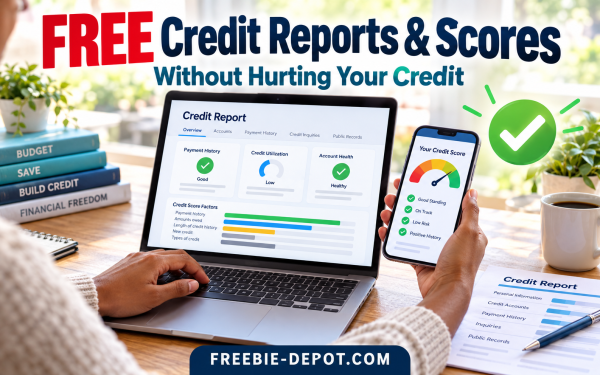
Checking your credit score used to feel like a high-stakes gamble—one wrong click, and you’d worry about lowering your score or getting trapped in a hidden monthly subscription.
Checking your own credit is considered a soft inquiry, which means it will never hurt your credit score. Furthermore, federal regulations and FREE digital tools make it easy to access your complete credit history and numerical scores without spending a single dime.
A breakdown of where to find your official credit reports, how to track your actual credit scores, and how to avoid online fee traps follows.
The Golden Rule: Hard Inquiries vs. Soft Inquiries
Understanding why checking your own credit won’t hurt your score boils down to the difference between two types of credit pulls:
-
Soft Inquiries (Soft Pulls): These occur when you pull your own credit report, or when a company checks your credit for background checks or pre-approved offers. Soft inquiries are only visible to you on your internal report and have zero impact on your credit scores.
-
Hard Inquiries (Hard Pulls): These occur when you apply for a credit card, auto loan, or mortgage, and a lender evaluates your application. Hard pulls can temporarily drop your score by a few points.
Step 1: Claim Your Official FREE Credit Reports
By law, you are entitled to FREE copies of your credit reports from the three major nationwide consumer reporting bureaus: Equifax, Experian, and TransUnion.
Where to Go
Important: Avoid imposter sites that ask for a credit card up front or charge “processing fees.” The official platform will never ask for payment details to provide your legal reports.
How Often Can You Get Them?
While federal law originally mandated one FREE report per bureau every 12 months, the three major bureaus permanently extended FREE weekly online credit reports through AnnualCreditReport.com.
How to Request Your Reports Online:
-
Navigate to AnnualCreditReport.com.
-
Click “Request your FREE credit reports.”
-
Fill out the identity form (requires your full legal name, Address history, SSN, and DOB).
-
Select which credit bureaus you want to inspect (Equifax, Experian, or TransUnion).
-
Answer identity verification security questions (e.g., previous addresses, loan amounts).
-
Download or save your report as a PDF immediately for your records.
Step 2: Access Your FREE Credit Scores
While AnnualCreditReport.com provides detailed histories of your accounts, payment statuses, and public records, it generally does not include your numerical credit score (such as your FICO or VantageScore).
To view your current scores for FREE without harming your credit, use these trusted, no-cost avenues:
1. Your Existing Bank or Credit Card Issuer
Most major banks and credit card companies provide FREE, updated credit scores directly within their mobile apps or online banking portals as an added perk for account holders.
-
Capital One: CreditWise (FREE for everyone, even non-customers).
-
Discover: Credit Scorecard.
-
Chase: Credit Journey.
-
American Express & Bank of America: FREE monthly FICO Score updates for cardholders.
2. FREE Credit Bureau Accounts
You can sign up for FREE accounts directly with the bureaus to monitor your scores:
-
Experian: Offers a FREE account providing your official FICO Score 8 based on Experian data, updated monthly.
-
Equifax & TransUnion: Offer basic FREE monitoring tools on their respective websites.
3. Authorized Third-Party Services
Platforms like Credit Karma (Equifax & TransUnion) and Credit Sesame offer FREE VantageScore updates and full account monitoring. These platforms generate revenue through recommended financial products rather than charging users to view their scores.
Summary Comparison: Where to Get What
| Resource | What You Receive | Score Type Included | Frequency |
| AnnualCreditReport.com | Complete Credit Reports (3 Bureaus) | None (Reports Only) | Weekly |
| Experian FREE Account | Experian Credit Report + Score | FICO Score 8 | Monthly / Ongoing |
| Bank / Credit Card Apps | Credit Score + Summary Data | FICO or VantageScore | Monthly |
| Credit Karma | TransUnion & Equifax Reports + Scores | VantageScore 3.0 | Weekly |
What to Look for When Reviewing Your Reports
Once you pull your credit reports, scan them carefully for inaccuracies or signs of identity theft:
-
Personal Info: Check that your name, address history, and employment details are accurate.
-
Unfamiliar Accounts: Look for credit cards, personal loans, or inquiries you didn’t initiate.
-
Inaccurate Payment Statuses: Ensure payments marked as “late” or “in collections” match your records.
If you spot an error, file a dispute directly through the bureau listing the inaccuracy—correcting errors can give your score an immediate boost!


